A Beginner's Chinese Pantry: 12 Staples to Stock

If you've ever stood in the aisle of a Chinese grocery store holding your phone, squinting at a recipe and trying to figure out which of the forty soy sauces you actually need, this guide is for you.
Here's the good news: you don't need forty bottles. A genuinely useful Chinese pantry comes down to a small core of ingredients that quietly do most of the work. Get these twelve, and you'll be able to cook a weeknight stir-fry and simmer a pot of silky sweet soup without a second trip to the store.
I've split the list into two halves. The first six are the savory foundations — the bottles and dried goods behind everyday cooking. The last six are the nourishing dried goods, the pantry treasures behind the slow-simmered sweet soups and gentle teas that give this kitchen its name. For each one, you'll get what it is, two or three easy ways to use it, and one buying tip.
I share a new recipe or ingredient guide every week — subscribe below to cook along.
Part 1 — The Savory Foundations
These are the workhorses. If you cook anything savory, these six earn their shelf space first.
1. Light Soy Sauce (生抽, shēng chōu)
The everyday workhorse — salty, thin, and lighter in color than you might expect. When a recipe just says "soy sauce," this is almost always what it means. It seasons, it dips, it forms the backbone of countless sauces.
Use it for: stir-fries, marinades, dressing blanched greens, dumpling dipping sauces.
Buying tip: Look for "light" or "thin" on the label. Pearl River Bridge and Lee Kum Kee are reliable brands you'll find almost anywhere.
2. Dark Soy Sauce (老抽, lǎo chōu)
Thicker, darker, and a touch sweet. You use it in small amounts, mostly for color rather than salt — it's what gives a braise that deep, glossy mahogany look. It is not a one-for-one swap for light soy.
Use it for: red-braised dishes, fried rice color, glazing.
Buying tip: A little goes a long way, so one bottle lasts months. Keep it separate in your mind from light soy — they do different jobs.
3. Shaoxing Wine (绍兴酒, shào xīng jiǔ)
A fermented rice wine and the single most "where did that flavor come from?" ingredient on this list. It rounds out savory dishes and takes the raw edge off meat and seafood.
Use it for: a splash into almost any stir-fry, braise, or marinade.
Buying tip: Find the cooking version in the Asian-foods aisle. Dry sherry is a passable substitute in a pinch, but the real thing is cheap and worth it.
4. Toasted Sesame Oil (香油, xiāng yóu)
Deep amber and intensely fragrant. This is a finishing oil, not a cooking oil — you add it off the heat, at the end, for aroma. Cook with it and you'll lose the very thing you bought it for.
Use it for: a few drops over soups, noodles, and dressings right before serving.
Buying tip: Buy "toasted" (the dark kind), not plain sesame oil. Store it somewhere cool so it stays fragrant.
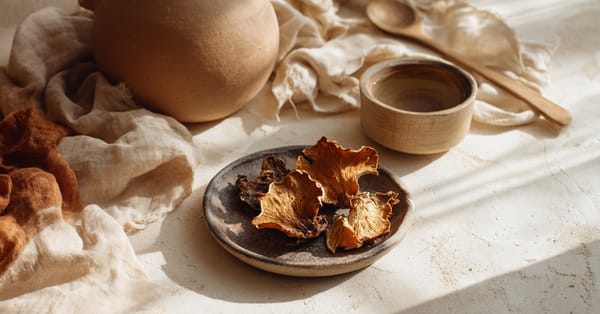
5. Dried Shiitake Mushrooms (香菇, xiāng gū)
Dried mushrooms carry a savory depth that fresh ones simply can't match. As a bonus, the water you soak them in becomes an instant, flavorful broth — never throw it away.
Use it for: soups, braises, and fillings; save the soaking liquid as stock.
Buying tip: Soak in warm water for 30 minutes or more until soft. Sealed in a jar, they keep for a year.
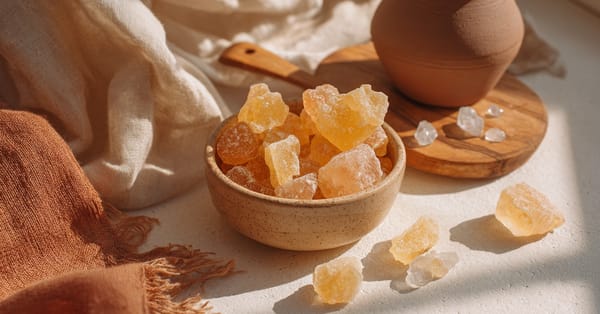
6. Rock Sugar (冰糖, bīng táng)
Crystallized sugar that melts into a clean, mellow sweetness — rounder and less sharp than granulated. It's the traditional choice for sweet soups and for balancing savory braises.
Use it for: sweet dessert soups, red-braised dishes, herbal teas.
Buying tip: Sold as yellow or white lumps; either works. Start with a small bag.
Part 2 — The Nourishing Dried Goods
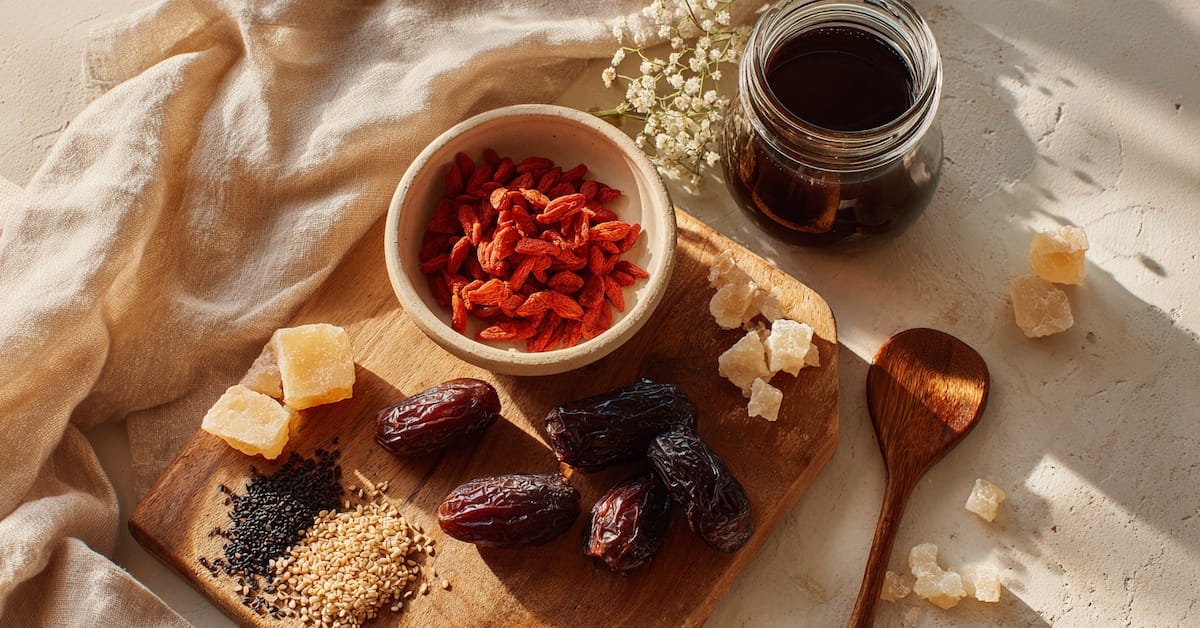
This is where a Chinese pantry starts to feel different from a Western one. These six dried goods are the building blocks of tong sui — the slow-simmered sweet soups and gentle teas that have been everyday comfort food in Chinese homes for generations. They keep for months, so a small stock goes a long way.
7. Goji Berries (枸杞, gǒu qǐ)
Small, soft, red-orange dried berries with a mild sweet-tart flavor. In the West they get tossed into smoothies, but in a Chinese kitchen they belong in something warm — added in the last few minutes of a soup or tea so they plump up without turning to mush.
Use it for: soups, teas, congee, and steamed dishes; a quick rinse is all the prep they need. There's a whole guide to how Chinese home cooks actually use them if you want to go deeper.
Buying tip: Look for plump, bright berries rather than dull brown ones. Keep them in the fridge once opened.
8. Red Dates / Jujube (红枣, hóng zǎo)
Dried jujubes with a chewy, caramel-like sweetness. They're the quiet base note in countless home-style sweet soups, and they pair beautifully with goji berries.
Use it for: simmering into soups and teas — the simplest being a five-minute red date and longan tea.
Buying tip: Sold whole or pitted — pitted saves you a step. Tear them open before cooking to release more flavor.
9. Dried Snow Fungus (银耳, yín ěr)
A pale, ruffled mushroom — also called tremella — that looks like a piece of dried coral and transforms into something silky and gently gelatinous when cooked. It's the star of the most classic Chinese sweet soup.
Use it for: slow-simmered sweet soups with rock sugar, red dates, and goji, like this chilled snow fungus soup with pear.
Buying tip: Soak for 20–30 minutes until it blooms open, then snip off the firm yellow base before cooking.
10. Dried Longan (桂圆, guì yuán)
Shelled, dried longan fruit — dark, chewy, with a honeyed, almost smoky sweetness that's far more interesting than a raisin.
Use it for: sweet soups and teas, especially alongside red dates.
Buying tip: Buy it already shelled and pitted (often labeled "longan meat"). Store sealed and cool.
11. Black Sesame (黑芝麻, hēi zhī ma)
Tiny black seeds with a rich, nutty, slightly bitter depth. Toasting them in a dry pan for a minute wakes up the aroma dramatically — don't skip it.
Use it for: grinding into a warm black sesame soup, sprinkling over rice and greens, or folding into fillings.
Buying tip: Buy them raw and toast them yourself for the best fragrance.
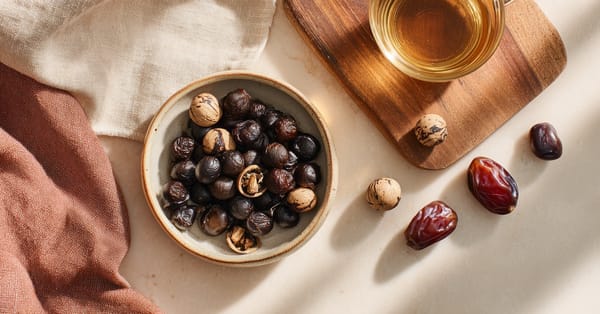
12. Lotus Seeds (莲子, lián zǐ)
Pale dried seeds that cook up soft and starchy — somewhere between a chickpea and a chestnut. A classic partner to snow fungus in sweet soups.
Use it for: sweet soups and congee.
Buying tip: If you spot a tiny green sprout in the center, remove it — it's bitter. Many are sold already de-cored, which saves the trouble.
What to buy first
Twelve sounds like a lot, so don't feel you need it all in one trip. If you want a simple starting order:
- Cooking savory food this week? Start with light soy, Shaoxing wine, and toasted sesame oil. Those three unlock most everyday dishes.
- Want to try your first sweet soup? Grab rock sugar, dried snow fungus, red dates, and goji berries — that's a classic combination in one pot.
Everything else you can add as recipes call for it.
A note on storage
The bottles (soy sauces, sesame oil) are happiest in a cool cupboard, with sesame oil and opened soy keeping best in the fridge over the long run. The dried goods all store the same way: sealed containers, away from light and heat. Goji berries are the one exception worth refrigerating once opened, since they're softer and more prone to clumping.
Where to buy
Your local Chinese or pan-Asian grocery is the cheapest and most fun place to shop for all of this. If you don't have one nearby, every item on this list is available online — the specific brands and types I'd reach for are all on the Pantry page, along with the few tools worth owning.
Stock even half of this list and you've got the foundation for dozens of dishes. The natural next step is to put those dried goods to use — and the gentlest place to start is a bowl of tong sui, the Chinese sweet soup tradition these ingredients were practically made for.
→ Read next: What Is Tong Sui? A Beginner's Guide to Chinese Sweet Soups
New recipes, ingredient guides, and seasonal ideas land here every week — subscribe below to cook along.