Goji Berries: How Chinese Home Cooks Actually Use Them

You've probably seen goji berries scattered over a smoothie bowl or blended into a "superfood" shake. That's fine — but it isn't really how they're used where they come from. In a Chinese kitchen, goji berries almost never end up in a blender. They go into something warm: a pot of soup near the end, a simple tea, a bowl of congee. Understanding that shift is the difference between a novelty topping and an ingredient you actually reach for.
If you've made any of the sweet soups on this site, you've already used them — that bright red scattering added in the last few minutes. Here's a proper introduction to what they are, how to choose them, and the everyday ways they're used at home.
What they actually are
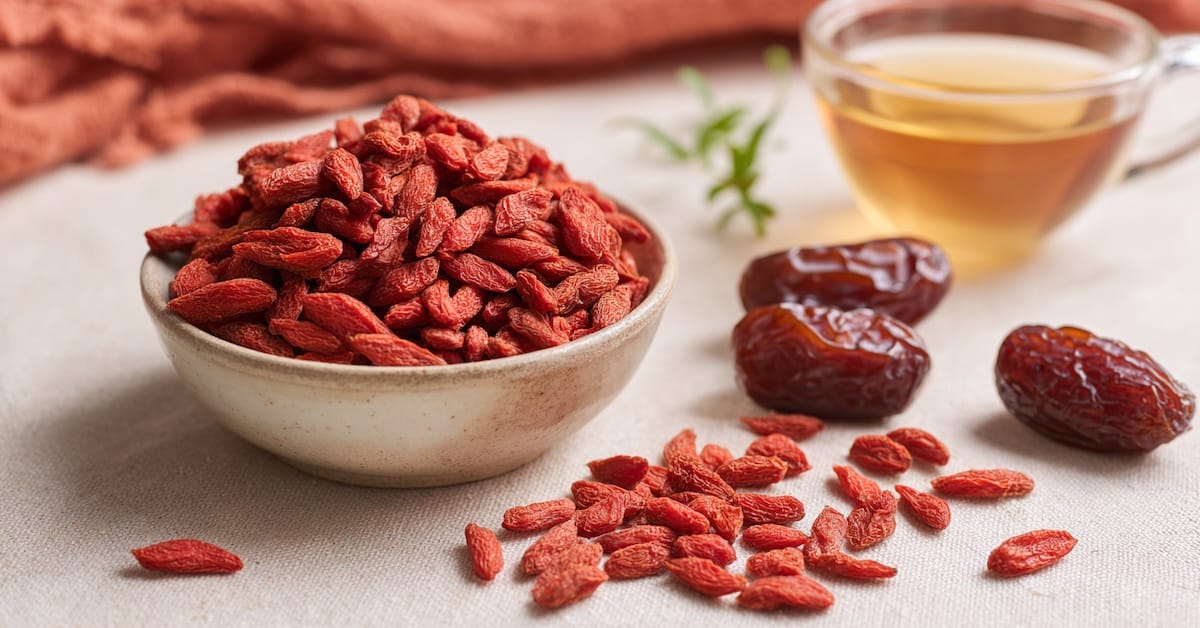
Goji berries (枸杞, gǒu qǐ) are small, soft, red-orange dried berries with a mild, sweet-tart flavor — think of a raisin crossed with a dried cranberry, but gentler and less sugary. They come dried, and they need almost no preparation: a quick rinse is usually all it takes. They plump up and soften when they meet heat or liquid, which is why they're almost always added to something rather than eaten by the handful.
I share a new recipe or ingredient guide every week — subscribe below to cook along.
The 5 ways they're actually used at home
1. Tossed into soups at the end. This is the classic move. Goji berries go into sweet soups and savory broths alike in the last 5 minutes of cooking — long enough to plump up, not so long that they turn to mush. You've seen this in snow fungus soup and red bean soup.
2. Steeped in tea. A small handful in a cup or pot, often with red dates, makes a gentle, naturally sweet tea. Just add hot water and let it sit a few minutes. One of the simplest daily uses there is.
3. Stirred into congee. Added near the end of a pot of rice porridge, they bring little bursts of sweetness and color to an otherwise plain, savory bowl.
4. Scattered over steamed dishes. A few goji berries on top of steamed egg custard, steamed chicken, or fish add a pop of color and a subtle sweetness that plays nicely against savory flavors.
5. Simmered in broths and braises. In slow-cooked savory soups and braises, they melt into the background, adding a faint sweetness and richness to the liquid.
Notice what's not on this list: raw, by the handful, or blitzed into a smoothie. You can do those things — but the warm, gentle uses are where goji berries really belong.
How to choose and store them
- Look for plump, bright berries. Good goji berries are a vivid red-orange and slightly soft. Avoid ones that look dull, brown, or hard — they're past their best.
- Check they're loose, not clumped. A little clumping is normal, but a solid brick usually means they've absorbed moisture.
- Store them airtight. Keep them sealed and away from light. Once opened, the fridge is the safest place — they're soft and can clump or spoil in a humid pantry.
- A little goes a long way. You rarely need more than a tablespoon or two at a time, so a bag lasts a good while.
Where to get them
Any Chinese or pan-Asian grocery will have them, usually near the dried goods. If you'd rather order online, they're on my Pantry page along with the other sweet-soup staples.
Want to put them to use right away? They're the finishing touch in the chilled snow fungus soup with pear, and lovely simmered into red bean soup.
New recipes and ingredient guides land here every week — subscribe below to cook along.