Rock Sugar (冰糖): Why Chinese Sweet Soups Skip White Sugar

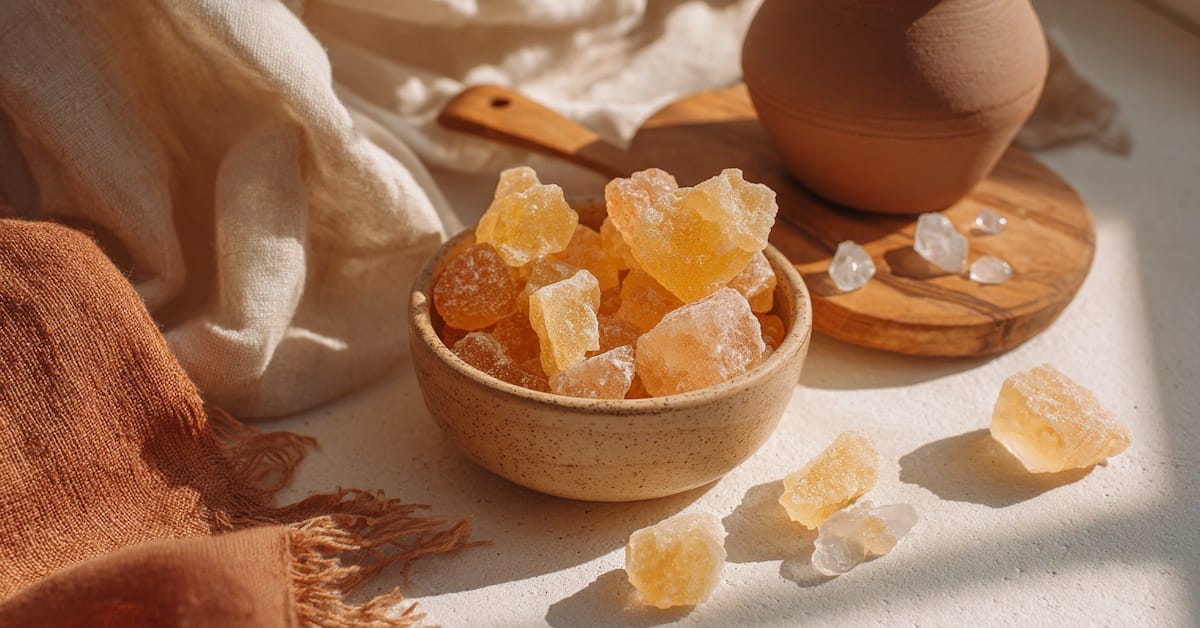
Open almost any recipe on this site and you'll see the same sweetener: rock sugar, not white sugar. It's one of the quiet defining choices of Chinese sweet soups — and once you understand why, you'll reach for it too. Rock sugar (冰糖, bīng táng) gives a cleaner, mellower, less sharp sweetness than granulated white sugar, and it's the traditional choice for tong sui, teas, and even savory braises.
Here's what it actually is, how it differs from the white sugar in your cupboard, and how to use it.
What it actually is
Rock sugar is crystallized sugar — sugar that's been dissolved and allowed to recrystallize slowly into hard, chunky, translucent lumps, somewhere between a large crystal and a small rock. It comes in two colors: clear/white and a pale amber-yellow. The yellow kind is slightly less refined and has a faint, gentle molasses note; the clear kind is cleaner and more neutral. For most sweet soups, either works — it's a matter of preference.
The key difference you'll taste: rock sugar dissolves into a rounder, mellower, less aggressive sweetness than granulated white sugar. White sugar can taste sharp and one-dimensional; rock sugar's sweetness is smoother and lets the other flavors — the caramel of red dates, the honey of longan, the nuttiness of sesame — come through instead of covering them up.
I share a new recipe or ingredient guide every week — subscribe below to cook along.
Rock sugar vs white sugar: does it really matter?
For everyday baking, no — white sugar is fine. But for the gentle, lightly-sweet world of tong sui, rock sugar genuinely makes a difference:
- Cleaner sweetness. It rounds out a soup without making it cloying, which is the whole point of tong sui — you want lightly sweet, refreshing, not dessert-sweet.
- It's traditional. Generations of Chinese home cooks have used it for sweet soups and braises, and recipes are written with its milder sweetness in mind.
- It dissolves slowly. This is actually handy — you add it and let it melt into a simmering pot, tasting as you go, rather than dumping in a measured amount all at once.
Can you substitute white sugar? Yes, in a pinch — but use a little less, since white sugar tastes sharper, and add it gradually to taste. The result will be slightly less mellow, but perfectly good.
How to use it
- Add it near the end. In most sweet soups, you sweeten after the main ingredients have softened — sugar added too early can keep beans and seeds from getting tender. Stir in the rock sugar toward the end and let it dissolve.
- Taste as you go. Because it dissolves slowly, it's easy to add a little at a time and stop when it's right. Tong sui should be gently sweet, not syrupy — start with less than you think.
- Break up large lumps. Big chunks take longer to dissolve; if yours come as large rocks, give them a gentle smash so they melt faster.
- It works in savory dishes too. A small piece of rock sugar is classic in red-braised dishes, balancing salty soy with a subtle rounded sweetness.
How to buy and store it
- Clear or yellow — your call. Both are widely sold. Yellow has a touch more character; clear is more neutral. Start with whichever you find.
- It keeps almost forever. Rock sugar is shelf-stable and doesn't really spoil — just keep it sealed and dry so the lumps don't absorb moisture and clump.
- A bag lasts ages. You use fairly little at a time, so even a small bag goes a long way.
Put it to use
Rock sugar is the sweetener in nearly every recipe here — the silky chilled snow fungus soup with pear, the cozy black sesame soup, the summery red bean soup, and more. It's one of the cornerstones of Chinese sweet soups, and it's on the Pantry page if you need to stock up.
New recipes and ingredient guides land here every week — subscribe below to cook along.