How to Cook Lotus Seeds So They're Not Bitter (and Actually Get Soft)

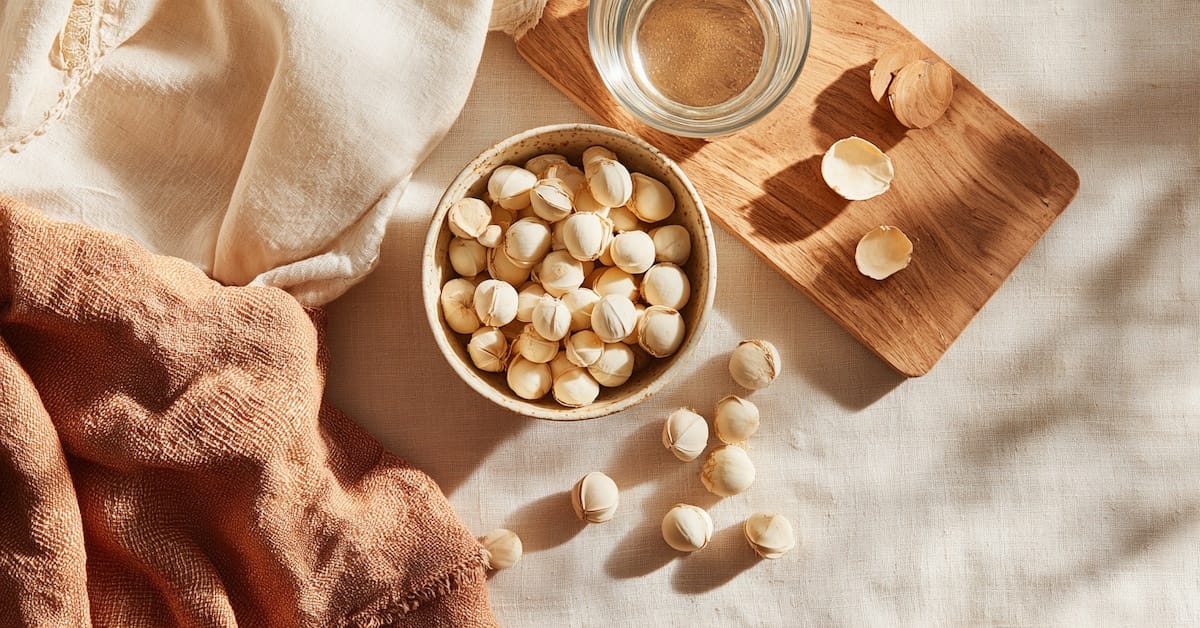
Dried lotus seeds (莲子) are a lovely addition to sweet soups and congee — soft, starchy, and mild, somewhere between a chickpea and a chestnut. But two things go wrong for first-timers again and again: the seeds turn out unpleasantly bitter, or they stay stubbornly hard no matter how long they cook. Both are easy to fix once you know what's causing them.
Here's the whole thing: why it happens, and the couple of small steps that give you soft, sweet, tender lotus seeds every time.
I share a new recipe or ingredient guide every week — subscribe below to cook along.
Where the bitterness comes from: the green core
The single most common reason lotus seeds taste bitter is a tiny part most people don't know to look for: the green germ (莲芯) running through the center of the seed. It's a small, thread-like green sprout, and it is genuinely bitter — one left in a whole pot can throw off the flavor of the whole thing.
So the fix is simple: remove it.
- Check whether yours are already de-cored. Many dried lotus seeds sold for cooking are already split and have the core removed — look closely, and if you see the seeds are halved with a small hollow channel down the middle, the work is done for you.
- If they're whole, soak them briefly to soften, then either split each seed with your fingers or a small knife and pull out the green thread, or push it out with a toothpick from one end. It's a little fiddly, but it's a one-time job and it's the difference between sweet and bitter.
If you're buying lotus seeds specifically for sweet soups, look for ones labeled as de-cored or "core removed" — it saves you the whole step.
Where the hardness comes from: not soaking
The other complaint — seeds that stay chalky and firm even after a long simmer — almost always comes down to skipping the soak. Dried lotus seeds are dense, and cooked straight from dry they take a very long time and often cook unevenly.
The fix: soak them in cool water for 1–2 hours (or longer — even overnight is fine) before cooking. This rehydrates them so they cook through evenly and turn properly soft and creamy in a reasonable time. A quick rinse first, then let them sit in plenty of water.
How to cook them soft
Once de-cored and soaked, lotus seeds are easy:
- Drain the soaked seeds and add them to your pot with fresh water or your soup base.
- Bring to a boil, then lower to a gentle simmer.
- Simmer for about 30–40 minutes, until they're soft enough to crush easily between your fingers. Older, drier seeds may want a little longer.
- If you're adding them to a sweet soup, add any rock sugar after they've softened — sugar added too early can keep them firm.
That's it: soft, tender, faintly sweet lotus seeds, no bitterness.
Quick troubleshooting
- Still bitter after cooking. The green core was still in. Check every seed next time, or buy the de-cored kind.
- Still hard after 40 minutes. They probably weren't soaked long enough, or they're old stock — give them a longer soak and a longer simmer.
- How many do I use? A small handful goes a long way in a pot of soup; they roughly double in size once soaked and cooked.
Put them to use
Lotus seeds are a classic partner to snow fungus in sweet soups — try them in a chilled snow fungus soup with pear, where they add a soft, starchy contrast. They're one of the staples of Chinese sweet soups, and they're on the Pantry page if you need to stock up.
New recipes and ingredient guides land here every week — subscribe below to cook along.